Categories
Tags
-
#Insulation Aluminium Coils
#Thick Aluminum Sheet
#2024 Aluminum Plate
#Aluminium Products Supplier
#5052 Aluminium Foil
#Household Aluminium Foil
#Color Coated Aluminium Circles
#5052 Aluminum Circle
#Aluminium Circles
#Aluminum Trim Coil
#Aluminum Cookware
#Web Guide Actuators
#Non-Stick Coating Technologies in Aluminium Cookware
#Cigarette Packaging Aluminium Foil
#Patio Benches
#Aluminium Circles in Smart and Modern Cookware
Archives
The Manufacturing Process of Cigarette Packaging Aluminium Foil
-
The journey of the aluminium foil in your cigarette pack is a marvel of precision engineering and high-speed manufacturing. It’s far more than just a sheet of metal—it’s a bespoke, multi-layered material designed for one very specific purpose. Let’s walk through its fascinating production process.
Stage 1: Creating the Raw Foil – Rolling & Annealing
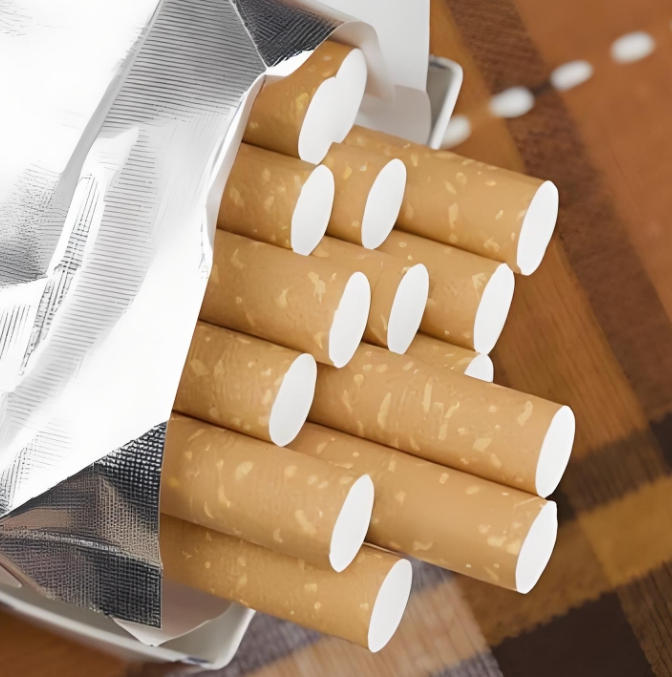
It starts with primary aluminium, which is cast into massive slabs. These slabs are hot-rolled down to about 3-4 mm thick coils. The critical step is cold rolling, where the aluminium is passed through successive sets of steel rollers under tremendous pressure and cooling.
Key Fact: The foil used in cigarette packs is typically between 6 to 7 microns thick (0.006 - 0.007 mm). That's about 1/10th the thickness of a human hair. To achieve this, the final passes often involve rolling two layers simultaneously to prevent tearing. The process requires impeccable cleanliness—a microscopic dust particle could cause a pinhole, compromising the barrier.
After rolling, the foil is annealed—heated in a controlled oven. This process relieves the stress from rolling and determines the foil's temper: soft, malleable, and perfect for folding without cracking.
Stage 2: Creating the Laminate – Coating & Lamination
Pure aluminium foil this thin is fragile and can develop pinholes. For packaging, it's almost always converted into a laminate.
Printing & Priming: The foil may first be printed with brand markings or anti-counterfeiting holograms. It is then coated with a primer to ensure adhesion for the next layer.
Lamination: The foil is bonded to a supporting web, most commonly:
Paper (30-40 gsm): Creates the classic "foil-paper" feel, allows for easy tearing, and adds opacity and stiffness. The adhesive used is food-grade and odorless.
Plastic Film (e.g., Polyethylene): Provides heat-sealability for different pack styles.
Lacquer Coating: The outer surface of the foil is often given a protective lacquer coating. This serves two vital functions: it prevents oxidation (which can dull the shiny surface) and, crucially, it provides a perfect, receptive surface for high-speed printing on the packaging line.
Stage 3: Slitting & Rewinding for Cigarette Packers
The massive, master jumbo roll of laminated foil (which can be over a meter wide and weigh tons) is then loaded onto a high-precision slitting machine.
Here, rotating circular blades slit the wide roll into dozens of much narrower reels, each matching the exact width needed for the inner liner of a specific cigarette pack brand (e.g., King Size, 100s).
These narrow reels are inspected for defects, weighed, and shipped to cigarette manufacturing plants.
Stage 4: On the Cigarette Production Line
At the packer, the foil reel is loaded into the packaging machine (like a GD or Focke). Here, at speeds of up to 700 packs per minute:
The foil is drawn precisely, creased along fold lines, and formed into a pouch around a bundle of cigarettes.
It is then folded with robotic accuracy and enveloped by the outer paperboard packet and its cellophane outerwrap.
Conclusion: A Symphony of Precision
The humble cigarette foil is a product of immense industrial sophistication. Its manufacturing is a balance of metallurgy, chemistry, and mechanical engineering—all to create a thin, reliable, and functional barrier that sits quietly in your pocket, performing its vital role in preservation day after day. It's a testament to how packaging is an integral, engineered component of the product itself.