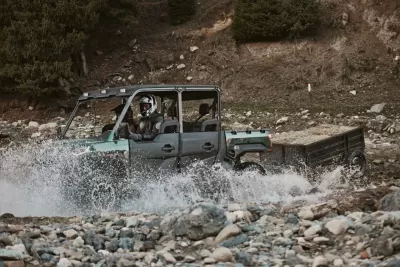
A Comprehensive Review of the UWolf 1000
-
Posted by loncin ATV Filed in Business #loncin #UWolf 1000 #utv #loncin utv #LONCIN UWolf 1000 3 views
When it comes to choosing a utility vehicle for demanding job sites, few models draw as much attention as the UWolf 1000. Known for its robust build and versatile performance, this machine is often marketed as a reliable “work partner.” But how well does it truly perform in real-life work environments? Below is a clear, grounded assessment of its advantages and drawbacks, especially for buyers who prioritize productivity, durability, and cost-efficiency.
Outstanding Power and Load Capacity
One of the UWolf 1000’s biggest strengths is its high-output engine, delivering enough torque to handle steep inclines, loose terrain, and heavy materials. For construction sites, farms, and forestry operations, that power translates directly into smoother workflow and less time spent making repeated trips.
Its cargo capacity and towing strength also make it suitable for hauling equipment, tools, and bulk supplies—tasks that would normally require a larger and more expensive utility truck.Strong Chassis and Off-Road Stability
The UWolf 1000 features a reinforced frame and suspension setup that helps it stay stable across mud, gravel, or uneven ground. Workers often value this because job sites rarely offer perfect driving conditions.
The four-wheel-drive system adds confidence, allowing operators to move equipment even in challenging weather. For industries like agriculture or logging, this reliability can significantly improve daily efficiency.Comfort and User-Friendly Operation
Although primarily a workhorse, the UWolf 1000 does not ignore driver comfort. Its ergonomic seating, intuitive dashboard layout, and manageable steering make long work days more bearable.
In operations where staff spend hours shuttling materials or inspecting large areas, that comfort becomes a productivity factor—less fatigue means more steady performance throughout the day.Fuel Consumption Can Be High Under Heavy Loads
No machine is perfect, and the UWolf 1000 has its trade-offs. When handling maximum loads or climbing consistently rough terrain, fuel consumption tends to rise noticeably.
For businesses concerned with operational costs or long daily mileage, this could become a budgeting challenge if not planned for in advance.Size and Maneuverability in Tight Spaces
While the UWolf 1000 provides excellent stability on open ground, its larger body size may limit agility in tight warehouse aisles, narrow orchards, or compact construction zones.
Operators working in environments that require frequent sharp turns or precision navigation might prefer a slightly smaller model depending on the task.Maintenance Requires Proper Scheduling
With great power and workload capacity comes the need for regular maintenance. The UWolf 1000’s engine, suspension components, and drivetrain benefit from consistent inspection.
This is not a flaw, but a practical consideration—companies must ensure proper servicing to maintain long-term durability. Neglecting routine maintenance may shorten the lifespan of key components.Conclusion
The UWolf 1000 stands out as a capable and dependable utility vehicle for professional work environments, offering strong power, excellent off-road stability, and operator comfort. While it does come with some limitations—higher fuel usage under heavy loads, a larger body for tight working spaces, and the need for regular maintenance—it remains a solid choice for industries that demand strength and reliability. For buyers seeking a balance of performance and practicality, the UWolf 1000 delivers a compelling combination of capabilities that make it a valuable partner in the field.