
Categories
Tags
-
#Waste Oil to Base Oil Plant
#Well Control Simulators
#HFO Visbreaking
#Transformer Oil BDV Tester
#VR Emergency Training Simulator
#SF6 Gas Purification Machine
#Laser Cleaning
#Automatic Laser Welder
#Benchtop Pneumatic Dot Peen Markers
#Oil Well Work
#Portable Well Control Simulators
#well logging
#Petroleum Engineering
#virtual reality emergency training simulator
#Well Control Simulator
#Waste Oil to Base Oil Plants
#Portable Simulator
#Web Guide Systems
#Floating Rig
#Turbine Oil Filtration
#Land Rig Installation
#Clothes Drop Boxe
#Industrial Garbage Compactor
#Magnetic Powder Brakes
Archives
Well Control Simulators vs. On-the-Job Training: Which Is More
-
For decades, the only way to truly learn well control was through on-the-job training (OJT)—watching seasoned mentors and eventually handling kicks on a live rig. It was the school of hard knocks. Today, high-fidelity well control simulators offer a compelling alternative. This sparks a vital debate: which method is more effective for training today's well control professionals? The answer isn't either/or, but a powerful combination of both.
On-the-Job Training (OJT): The Irreplaceable Foundation
Pros:
True Reality & Context: OJT provides irreplaceable context. It teaches the "feel" of the rig, the real-time noise, the teamwork dynamics, and the pressure of operational deadlines that simulators can't fully replicate.
System-Specific Knowledge: Every rig is slightly different. OJT trains personnel on the specific equipment, procedures, and culture of their actual workplace.
Mentorship & Tribal Knowledge: Learning from an experienced driller or supervisor passes down invaluable tacit knowledge—the tricks, judgments, and instincts developed over a career.
Cons:
Risk & Cost: Practicing well control during an actual kick is inherently dangerous and potentially catastrophic. Mistakes have real consequences.
Scarcity of Events: Major well control events are, thankfully, rare. Relying solely on OJT means a crew might go years without facing a real kick, leaving skills untested and rusty.
Inconsistent Experience: Training quality depends entirely on the mentor, the rig's activity, and chance. One crew member's experience can vastly differ from another's.
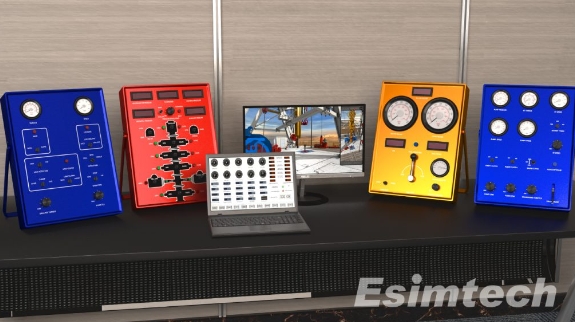
Well Control Simulators: The Ultimate Practice Field
Pros:
Safe, Repeatable, Standardized: Simulators allow for the deliberate, repeated practice of emergencies in a zero-risk environment. Every trainee can be exposed to the same critical scenarios, ensuring a consistent standard of competency.
Scenario Breadth & Depth: Instructors can create an endless library of scenarios—from basic kicks to complex blowouts, equipment failures, and deepwater complications. Trainees can experience more "well control years" in a week than in a decade on the job.
Focus on Decision-Making: Simulators isolate and stress-test the cognitive skills of well control: data interpretation, procedure selection, and consequence analysis, free from the physical distractions of a live rig.
Cons:
Fidelity Limits: Even the best simulator is a model. It cannot perfectly replicate every physical sensation or unexpected real-world variable.
Potential for "Simulator Comfort": There's a psychological difference between responding in a training center and on a rig at 3 AM in a storm. Simulators must be used in a way that reinforces, rather than diminishes, the gravity of real events.
The Verdict: A Synergistic Approach
Pitting simulators against OJT is the wrong framing. The most effective training strategy is a blended, cyclical model.
Start with Simulation: Use simulators to build core knowledge, procedural fluency, and initial muscle memory before a professional ever faces a real kick. This establishes a safe baseline of competency.
Apply and Refine with OJT: On the rig, under mentorship, personnel contextualize their simulator training. They learn the specific systems and apply their knowledge to routine operations, building real-world judgment.
Return to Simulation for Mastery & Up-skilling: Regularly, crews return to the simulator for advanced team drills, to practice rare "worst-case" events, and to certify their skills. This keeps skills sharp and introduces new techniques.
Conclusion: The Best of Both Worlds
The question isn't which is more effective, but how to best integrate them. Well control simulators are the ultimate tool for building and validating competency safely and consistently. On-the-job training is where that competency is contextualized, applied, and matured through experience. Together, they create a continuous learning loop that produces not just trained personnel, but truly proficient and resilient well control experts. In modern drilling, this integrated approach isn't just best practice—it's the standard for excellence.
Does your training program strike the right balance? Contact us to learn how our simulation solutions can seamlessly integrate with your on-the-job training to build a world-class well control team.