Categories
Tags
-
#Waste Oil to Base Oil Plant
#Well Control Simulators
#HFO Visbreaking
#Transformer Oil BDV Tester
#VR Emergency Training Simulator
#SF6 Gas Purification Machine
#Laser Cleaning
#Automatic Laser Welder
#Benchtop Pneumatic Dot Peen Markers
#Oil Well Work
#Portable Well Control Simulators
#well logging
#Petroleum Engineering
#virtual reality emergency training simulator
#Well Control Simulator
#Waste Oil to Base Oil Plants
#Portable Simulator
#Web Guide Systems
#Floating Rig
#Turbine Oil Filtration
#Land Rig Installation
#Clothes Drop Boxe
#Industrial Garbage Compactor
#Magnetic Powder Brakes
#acuum Hydraulic Oil Filtration Technolog
#Mobile Waste Compactor
#Fracturing and Acidizing Simulator
Archives
Benefits of Using a Fracturing and Acidizing Simulator for Prod
-
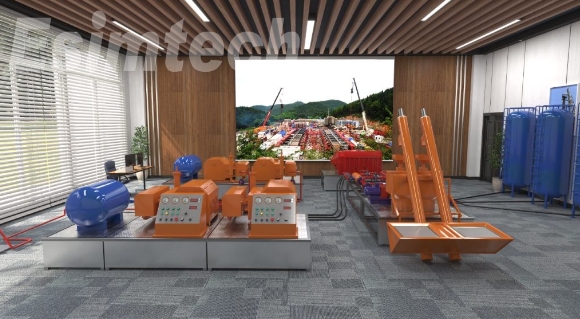
A fracturing and acidizing simulator provides a physics-based link between stimulation design and production outcomes. By modeling fracture geometry, conductivity, and post-treatment permeability changes, the simulator offers more reliable inputs for production forecasting. This leads to forecasts that better reflect how fluids will flow from the reservoir to the wellbore over time, reducing uncertainty compared to empirical or purely statistical methods.
Optimization of Stimulation Design and Operational Decisions
Using a simulator allows engineers to test multiple stimulation scenarios before field execution. Variations in fluid volumes, injection rates, proppant concentrations, or acid types can be evaluated virtually to understand their impact on future production. This capability helps identify optimal designs that maximize recovery while controlling costs, ultimately improving the economic performance of the asset.
Risk Reduction and Long-Term Field Planning
Production forecasting supported by fracturing and acidizing simulation helps reduce technical and financial risk. By anticipating how stimulation treatments influence decline behavior and recovery factors, operators can make more informed decisions on well spacing, refracturing candidates, and field development strategies. Over the life of the field, simulation-driven forecasts support more robust planning and better alignment between subsurface understanding and production expectations.