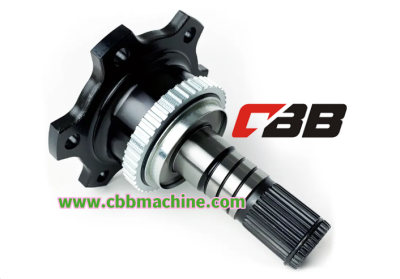
Why Choose Differential Shaft from Cbbmachine?
-
In modern slitting and rewinding operations, the Differential Shaft has become a key solution for balanced tension management, and Cbbmachine integrates this mechanism into thoughtfully engineered systems tailored for complex material handling tasks. By allowing individual cores to rotate with controlled slip, the shaft compensates for thickness variation and uneven tension across multiple rolls. This adaptive function supports consistent winding quality while reducing the risk of material deformation.
Uniform tension is fundamental when processing film, foil, paper, or other flexible substrates. Without proper control, differences in roll diameter or material characteristics can result in wrinkling or telescoping. A well-structured shaft with friction elements or torque control units enables each core to adjust independently. This dynamic balance helps maintain alignment throughout the winding cycle and promotes smoother roll formation.
Mechanical coordination within the shaft assembly contributes significantly to operational reliability. Carefully arranged internal components allow torque to be distributed evenly while preserving structural stability. Durable surface treatments further enhance wear resistance, supporting consistent engagement over prolonged operation. Such design considerations help maintain predictable performance in demanding industrial environments.
Flexibility is another essential attribute in converting applications. Production requirements often vary depending on order specifications or substrate properties. A shaft system capable of accommodating multiple core widths without complex adjustments improves workflow efficiency. Operators benefit from simplified setup procedures and smoother transitions between production tasks.
Integration with automated control equipment further strengthens system performance. When paired with responsive tension management units, the shaft supports synchronized operation across the entire rewinding process. This coordination enhances material consistency and contributes to stable output quality. Balanced torque distribution reduces mechanical vibration, promoting quieter and more controlled operation.
Maintenance efficiency also plays a practical role in sustaining productivity. A design that allows convenient inspection and replacement of friction components minimizes downtime. Clear structural organization simplifies routine servicing, ensuring that the equipment remains ready for continuous production demands.
Selecting the appropriate winding component reflects a commitment to precision and adaptability. By combining mechanical stability with controlled slip functionality, modern shaft systems help manufacturers achieve consistent roll structure even when handling diverse materials. Each rotation becomes a measured adjustment toward uniform output.
If your production line seeks refined tension control and adaptable winding solutions, allow your next improvement to begin at https://www.cbbmachine.com/ , where innovative motion solutions quietly redefine industrial precision.