Why Ragdoll Archers Feels So Addictive: Comedy Physics + Real M
-
Introduction
Some games are funny once. Others stay funny because the outcomes keep changing. Ragdoll Archers does both—and then adds something most physics comedy games don’t: meaningful mastery. You laugh at the chaos early, but you keep playing because you can feel yourself getting better. That mix is exactly what makes it so addictive.
What Is Ragdoll Archers?
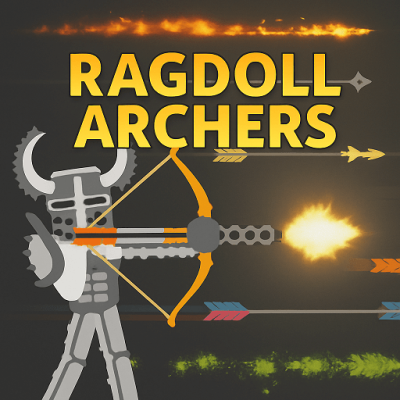
Ragdoll Archers is a head-to-head archery duel where characters behave like ragdolls—soft bodies that react dramatically to forces. You control aim angle and shot power, but you also manage instability caused by recoil, movement, and impacts. Every match becomes a balancing act between clean execution and unpredictable motion.
The “Not Random” Core
Yes, outcomes vary. But the game rewards players who understand three things:
- Positioning: A stable stance beats a risky “highlight” shot.
- Timing: Shooting during an opponent’s lean or recovery creates knockdowns and denies counters.
- Pressure: Repeated safe hits force mistakes and rushed releases.
If you consistently apply these, you’ll win more often—even when the physics gets chaotic.
Why Physics Makes Each Hit Feel Important
In many games, a hit is just damage. In Ragdoll Archers, a hit is also state change. It can interrupt a draw, tilt posture, or create a moment where the opponent can’t aim properly. That means you can “snowball” advantage: one good arrow becomes two, then three, then the round.
Practical Tips to Level Up
- Respect recoil: your next shot depends on your last shot.
- Use body shots early to destabilize and control tempo.
- Convert knockdowns into finishes quickly.
- Stay calm—reading movement patterns is part of the skill.
Conclusion
Ragdoll Archers succeeds because it’s two games at once: a comedy physics show and a tactical duel. If you enjoy improving through practice and turning chaos into control, it’s far more skill-based than it looks—and that’s why it keeps pulling players back for “one more match.”