Categories
Tags
Archives
Navigating the Global Shift in SF6 Management
-
The electrical power industry is currently standing at a critical crossroads regarding the use of Sulfur Hexafluoride (SF6). While SF6 is prized for its exceptional dielectric strength and arc-quenching capabilities in high-voltage switchgear, it is also documented as the most potent greenhouse gas known to man, with a global warming potential (GWP) 23,500 times that of CO2. As international regulatory frameworks tighten, the adoption of advanced SF6 gas recovery and refilling equipment has transitioned from a best practice to an operational necessity.
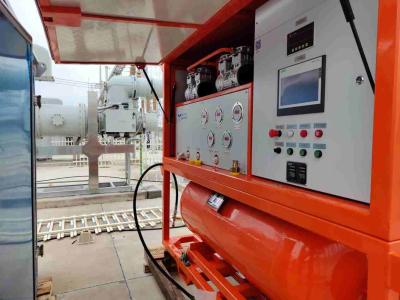
The environmental impact of SF6 is largely dictated by how it is managed during the installation, maintenance, and decommissioning phases of electrical assets. Historically, minor leakages or improper venting during maintenance were overlooked, but today’s "zero-emissions" targets leave no room for such negligence. Modern SF6 gas recovery technologies are designed to create a closed-loop system where the gas never touches the atmosphere. These systems utilize high-performance vacuum pumps and oil-free compressors to extract the gas from switchgear, liquefy it for storage, and then re-introduce it once maintenance is complete.
However, recovery is only half of the equation. As equipment ages, the SF6 gas within can become contaminated with moisture, air, and decomposition products (such as SO2 and HF) caused by electrical arcing. This is where the SF6 gas purification process becomes essential. High-end recovery plants now integrate multi-stage filtration systems that remove these toxic byproducts, restoring the gas to a purity level that meets or exceeds IEC standards. By purifying and reusing the gas, utility companies significantly reduce the need for new SF6 production, directly contributing to a circular economy within the power sector.
In conclusion, the path to a sustainable electrical grid is paved with sophisticated gas management strategies. By investing in robust recovery and purification infrastructure, the industry can mitigate the environmental risks associated with SF6 while ensuring the continued reliability of the global energy supply.