Categories
Tags
-
#Waste Oil to Base Oil Plant
#Well Control Simulators
#HFO Visbreaking
#Transformer Oil BDV Tester
#VR Emergency Training Simulator
#SF6 Gas Purification Machine
#Laser Cleaning
#Automatic Laser Welder
#Benchtop Pneumatic Dot Peen Markers
#Oil Well Work
#Portable Well Control Simulators
#well logging
#Petroleum Engineering
#virtual reality emergency training simulator
#Well Control Simulator
#Waste Oil to Base Oil Plants
#Portable Simulator
#Web Guide Systems
#Floating Rig
#Turbine Oil Filtration
#Land Rig Installation
#Clothes Drop Boxe
#Industrial Garbage Compactor
#Magnetic Powder Brakes
#acuum Hydraulic Oil Filtration Technolog
#Mobile Waste Compactor
#Fracturing and Acidizing Simulator
#Trailer Purifier
Archives
5 Key Skills Every Crane Operator Can Master on a Portable Simu
-
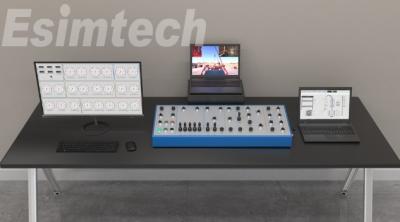
For crane operators, skill is the difference between a routine lift and a major incident. While field experience is irreplaceable, portable simulators have emerged as the ultimate pre-game training tool. They allow operators to hone specific, critical skills in a risk-free zone. Let’s break down the five key competencies you can develop—and master—long before you step onto a real jobsite.
1. Precision Load Control & Spotting:
This is the core of the craft. A high-fidelity simulator forces you to manage the pendulum effect, practice smooth acceleration and deceleration, and land loads with pinpoint accuracy. Repeated virtual practice in various wind conditions builds the fine motor control and patience needed for real-world precision.
2. Depth Perception & Spatial Awareness in 3D Space:
Judging the hook’s distance to the boom, understanding blind spots, and visualizing the load’s path in a crowded environment are challenging. Simulators provide immersive 3D environments where you can constantly practice judging distances and understanding the machine’s spatial envelope without the anxiety of a costly collision.
3. Emergency Procedure Drills:
How do you react to a sudden mechanical failure or an imminent collision? In the field, you hope you remember your training. On a simulator, you can safely experience these high-stress scenarios repeatedly. Executing emergency shutdowns or responding to simulated system failures builds instinctual, correct reactions that become second nature.
4. Understanding Load Charts and Capacity Awareness:
Simulators can integrate interactive load planning. You can set up a lift, configure the crane, and then feel the consequences of being near capacity limits or operating outside the chart. This visceral, visual connection between the theoretical load chart and practical machine behavior is a profound learning experience.
5. Site-Specific Scenario Training:
Portable simulators can be programmed with models of your actual upcoming projects. Navigate a tight urban pick, work in a confined space near power lines, or execute a complex tandem lift—all within the exact digital twin of your worksite. This allows for mission rehearsal, identifying potential hazards, and planning the best approach before mobilization.
Conclusion:
A portable simulator isn’t a video game; it’s a dedicated skills gym. By focusing on these five key areas, operators can build a rock-solid foundation of competence and confidence. It transforms onboarding from passive learning into active skill-building, ensuring that when you finally sit in the real cab, you’re not just trained—you’re prepared.