Categories
Tags
-
#Waste Oil to Base Oil Plant
#Well Control Simulators
#HFO Visbreaking
#Transformer Oil BDV Tester
#VR Emergency Training Simulator
#SF6 Gas Purification Machine
#Laser Cleaning
#Automatic Laser Welder
#Benchtop Pneumatic Dot Peen Markers
#Oil Well Work
#Portable Well Control Simulators
#well logging
#Petroleum Engineering
#virtual reality emergency training simulator
#Well Control Simulator
#Waste Oil to Base Oil Plants
#Portable Simulator
#Web Guide Systems
#Floating Rig
#Turbine Oil Filtration
#Land Rig Installation
#Clothes Drop Boxe
#Industrial Garbage Compactor
#Magnetic Powder Brakes
#acuum Hydraulic Oil Filtration Technolog
#Mobile Waste Compactor
#Fracturing and Acidizing Simulator
#Trailer Purifier
#Drilling and Well Control
#Double-Stage Purifiers
Archives
Future Trends in Double-Stage Transformer Oil Purifier Technolo
-
As power grids become smarter and more demanding, the technology used to maintain them must evolve. The next generation of double-stage purifiers is moving beyond simple filtration toward intelligent, "set-it-and-forget-it" asset management.
The Rise of Intelligent Automation
The integration of AI and IoT is the most immediate trend. Future purifiers will feature real-time sensors that adjust vacuum levels and flow rates automatically based on the incoming oil's contamination levels. This reduces energy consumption and prevents over-processing, which can sometimes strip beneficial additives from the oil.
Enhanced Environmental Sustainability
We are seeing a shift toward "closed-loop" systems that minimize oil wastage and carbon footprints. Newer models are being designed with high-efficiency heating elements and vacuum pumps that require 20% less power while delivering the same deep-degassing results, aligning with global green energy initiatives.
Integration of Online Monitoring
The future lies in the marriage of purification and diagnostics. Instead of being a standalone maintenance tool, the double-stage purifier of 2026 and beyond will act as a mobile diagnostic lab. While the oil is being cleaned, the machine will simultaneously perform a full chemical analysis, providing the operator with a digital "birth certificate" of the oil's renewed health.
Advanced Nano-Material Filtration
Standard fiberglass filters are being replaced by nano-fiber membranes. These materials offer a much higher surface area, allowing for the capture of sub-micron particles and even specific aging acids that traditional purifiers struggle to remove. This ensures that the oil doesn't just look clean, but is chemically rejuvenated at a molecular level.
Portable and Compact Modular Designs
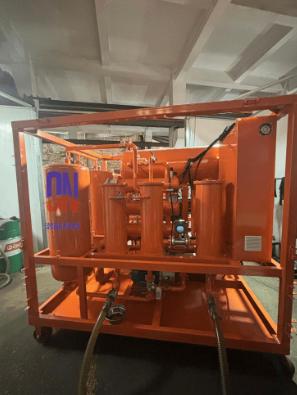
As renewable energy sites (like wind farms) are often in remote locations, there is a massive push for miniaturization. Future double-stage units will be modular—offering the power of a full-scale plant in a footprint small enough to be transported by a standard pickup truck or even a drone-assisted lift.