Categories
Tags
-
#Binocular Laser Rangefinders
#red dot sight
#Three Types of Night Vision Devices
#Red Dot with Iron Sights
#Types of Night Vision Scopes
#Wi-Fi Trail Camera
#Night Vision Binoculars
#Trail Cameras
#SVD Rifle Scopes
#Binoculars
#Rifle Night Vision Scopes
#Laser Rifle Scope
#Lightweight Binoculars
#Binoculars for Birdwatching
#Roof Binoculars
#Scope Mounting Tips for Long Range Accuracy
#Red Dot Sights
#Custom Marking Needles for All Your Industrial Needs
#Golf Binoculars with Laser Rangefinder
#Spotting Scope
#Close-Focus Binoculars
#Day Night Vision Rifle Scopes
#Deer Rifle Scopes
#Rifle Scope Supplier
#Compact Binoculars
#Wholesale Trail Cameras
#Rifle Scope Manufacturers
#Red Dot Sights Made in China
#Porro Binoculars vs Roof Prism Binoculars
#Rangefinder Binoculars
#Binoculars Made in China
#Cummins Cylinder Head
#Rangefinder Binoculars with Night Vision
#Waterproof and Shockproof Red Dot Sight for Shotgun Hunting
#Red Dot Scope
#Reflex Red Dot Sights
#Types of Scopes
#Tube Red Dot Sights
#Durable Tube Red Dot Sight for Hunting
#Red Dot Sight Parallax
#10x42 Porro Prism Binoculars
#Laser Rangefinder Rifle Scopes
#Red Dot Magnifier
Archives
How to Judge the Optical Quality of a Red Dot Magnifier: A Prac
-
How to Judge the Optical Quality of a Red Dot Magnifier: A Practical Guide for Shooters
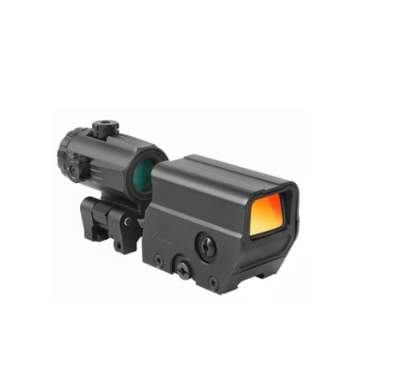
Red dot magnifiers vary widely in performance, and optical quality is one of the most important factors that determine how usable and comfortable the magnifier will be in real shooting scenarios. Whether you're comparing budget units or evaluating a high-end model, understanding the core optical qualities helps you avoid distortion, eye strain, and poor target visibility. Here's a complete guide on how to accurately judge the optical quality of any red dot magnifier.
1. Check for Image Clarity and Sharpness
The first thing to evaluate is whether the magnifier produces a crisp, clean image. A high-quality magnifier should:
l Show fine details clearly at 50–300 yards
l Display edges without blurring
l Maintain sharpness across most of the field of view
How to test:
Aim at detailed targets (tree bark, small text, grid patterns) and compare the clarity with and without magnification.2. Examine Edge-to-Edge Optical Quality
Many lower-tier magnifiers are sharp at the center but blurry or distorted at the edges.
What to look for:
l Soft edges
l “Fish-eye” effect
l Curved or stretched image borders
Poor edge performance can cause discomfort and slow down target acquisition.
3. Evaluate Color Accuracy and Light Transmission
Optical coatings significantly impact color fidelity and low-light performance.
High-quality magnifiers will:
l Deliver bright, neutral colors
l Minimize color tinting (green, blue, or yellow)
l Maintain brightness close to 1× viewing
If the image looks dim or overly tinted, the coatings are likely low quality.
4. Assess Eye Relief Comfort
Eye relief determines how far your eye can be from the lens while still seeing a full sight picture.
A high-quality magnifier typically offers:
l 2.3–2.8 inches of comfortable eye relief
l Minimal “tunnel vision” effect
l A forgiving eye box that does not demand perfect head placement
A magnifier with tight or sensitive eye relief will feel uncomfortable under recoil and during long sessions.
5. Inspect for Optical Distortion
Red dot magnifiers sometimes introduce:
l Barrel distortion
l Pincushion distortion
l Image warping when panning
How to test:
Look at straight lines (door frames, fences). If they bend noticeably, the optical engineering is not ideal.6. Consider Reticle Size & Astigmatism Effects
Magnification makes the red dot appear larger and may exaggerate astigmatism.
A good magnifier should:
l Keep the dot round, not star-shaped
l Avoid excessive bloom
l Maintain reticle clarity across the field of view
If the dot becomes significantly distorted, the magnifier’s optics are contributing to the problem.
7. Evaluate Chromatic Aberration
Cheap lenses often produce colored fringing around high-contrast edges.
Look for:
l Purple or green halos
l Colored edges around steel plates or targets
Minimal chromatic aberration indicates high optical quality.
Final Thoughts
Judging the optical quality of a red dot magnifier requires attention to clarity, distortion, coatings, and reticle behavior. A good magnifier should improve your shooting precision—not introduce optical issues that slow you down. With these evaluation steps, you can confidently compare models and find one that offers comfortable, accurate, and consistent performance.