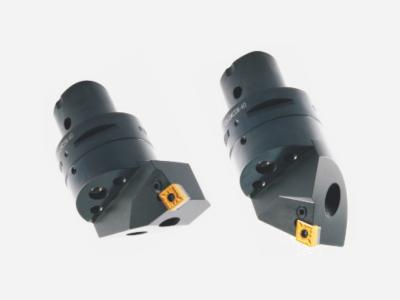
PSC Turning Holder: The Smart Toolholding Solution
-
In the world of CNC turning, toolholding technology plays a critical role in determining part quality, machining stability, and overall productivity. As machining demands evolve — with tighter tolerances, higher speeds, and multitasking machines — many manufacturers are turning to advanced toolholding systems like the PSC Turning Holder to stay competitive.
This blog post explains what a PSC Turning Holder is, why it’s trending on Google in machining circles, how it improves turning performance, and answers frequently asked questions about its use.
👉 Learn more about the Modular PSC Turning Holder:
https://www.xiray-tools.com/modular-psc-turning-holder/
What Is a PSC Turning Holder?
A PSC Turning Holder is a tool holder built on the Polygonal Shank Coupling (PSC) interface, which is standardized under ISO 26623. Unlike traditional holders that use a simple conical taper, PSC holders use a polygonal taper with face contact, creating a much more rigid and precise connection between the toolholder and the machine spindle.
This design ensures:
-
High rigidity and torsional stability
-
Better torque transmission
-
Self‑centering accuracy
-
High repeatability after tool changes
These characteristics make PSC Turning Holders ideal for demanding turning operations — especially when precision and surface finish matter.
Why PSC Turning Holders Are Trending
1. Increased Rigidity and Stability
PSC Turning Holders provide a robust mechanical connection that reduces vibration and chatter during machining. This leads to better surface finishes and tighter tolerances — key priorities for precision machining. Machinists frequently search for how to “reduce vibration in turning operations” and “improve surface finish,” and PSC tooling addresses both.
2. Faster, More Repeatable Tool Changes
Modern shops increasingly value fast changeovers and repeatability. PSC holders’ self‑centering design enables tools to be swapped with minimal repositioning, saving time and improving consistency — a hot topic in “quick tool change systems.”
3. Modular Tooling Flexibility
Shops are also interested in modular tooling systems that reduce inventory and simplify setup. PSC Turning Holders fit this trend by letting users switch heads or adapters for different turning tasks like grooving, threading, and profiling.
4. Compatibility With Multitasking Machines
With more shops investing in mill‑turn and hybrid machines, toolholders that work across multiple operations are increasingly sought after — another reason PSC tooling is trending on Google.
How PSC Turning Holders Work
PSC Turning Holders use a polygonal taper that mates precisely with the spindle’s interface. This polygonal shape increases the number of contact points compared with a standard taper, which:
-
Improves bending stiffness
-
Improves torsional rigidity
-
Reduces the tendency for the holder to shift under cutting loads
Additionally, PSC interfaces provide face-to-face contact, which helps distribute cutting forces more evenly and aids in repeatable tool positioning.
Advantages of Using PSC Turning Holders
Here’s how PSC Turning Holders improve turning performance and shop productivity:
✔ Higher Machining Rigidly
More stable clamping reduces vibration and chatter, resulting in smoother surfaces and reduced rework.
✔ Faster Setup and Tool Change
Modular design and self‑centering accuracy mean tools can be swapped quickly — ideal for high‑mix, low‑volume shops or lights‑out machining.
✔ Better Surface Quality
The rigid connection minimizes deflection and improves surface finish without sacrificing cycle time.
✔ Reduced Tool Inventory
One PSC base holder can support multiple tooling heads, reducing the number of unique holders needed in stock.
✔ Extended Tool Life
Stable cutting conditions achieved by PSC tooling often result in less tool wear and longer insert life.
Typical Applications of PSC Turning Holders
PSC Turning Holders are used in industries where precision and repeatability are paramount:
-
Aerospace components
-
Automotive powertrain and transmission parts
-
Medical device machining
-
Mold and die manufacturing
-
Precision shafts and journals
They support a range of operations, including:
-
External turning
-
Facing
-
Grooving
-
Thread cutting
-
Profiling
PSC tooling is especially beneficial in multitasking CNC environments where the same holder interface supports both turning and milling operations.
Frequently Asked Questions (FAQs)
1. What does PSC mean in machining?
PSC stands for Polygonal Shank Coupling, referring to a toolholder interface that combines polygonal taper and flange face contact for increased rigidity and precision.
2. How is a PSC Turning Holder different from a conventional toolholder?
Traditional toolholders typically rely on a simple conical taper interface. PSC Turning Holders use a polygonal taper with additional face contact, providing better torque transmission and repeatability.
3. Do PSC Turning Holders help improve surface finish?
Yes. Their rigid connection reduces vibration and tool deflection, helping to produce smoother surface finishes and tighter tolerances.
4. Are PSC Turning Holders compatible with automatic tool changers?
Yes. Many PSC tooling systems are designed to work with automatic tool changers in modern CNC machines, improving setup efficiency.
5. Can PSC Turning Holders be used on mill‑turn machines?
Absolutely. PSC holders are well suited for multitasking CNC machining centers, where turning, milling, and sometimes drilling are performed in a single setup.
6. Will PSC holders extend tool life?
Often, yes. The increased rigidity and stability reduce chatter and wear, which can extend cutting insert life and reduce tooling costs.
7. What sizes are available for PSC Turning Holders?
PSC holders come in standard sizes, such as PSC32, PSC40, PSC50, PSC63, PSC80, and PSC100, accommodating a variety of machine spindles and torque requirements.
-