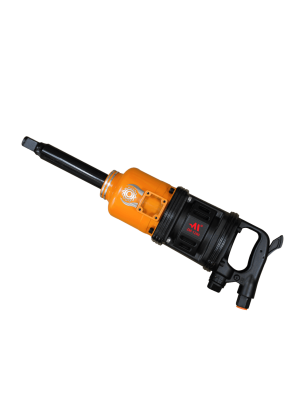
Delivering Controlled Force: The Role of a Torque Air Wrench
-
A Torque Air Wrench, commonly known as an air impact wrench or pneumatic torque gun, is a power tool that utilizes compressed air to deliver high rotational torque for tightening or loosening nuts, bolts, and other fasteners. It is a fundamental tool in automotive repair, heavy equipment maintenance, and industrial assembly lines where speed, power, and consistency are required. The tool's internal mechanism converts the energy of compressed air into a rapid series of high-impact rotational blows via a hammer and anvil system. This allows it to break loose stubborn, corroded fasteners or quickly run down bolts to a specified tightness with less physical effort than manual tools.
The operation of a Torque Air Wrench depends on a supply of clean, dry compressed air at the correct pressure, typically between 90 and 120 PSI. Key user-controlled variables include air pressure (which influences power output) and the tool's forward/reverse selector. Unlike a standard air ratchet, the impact mechanism engages primarily when the output shaft meets resistance, minimizing reaction force on the user's wrists. Sockets are attached via a square drive (commonly 1/2", 3/4", or 1"), and models vary in maximum torque output, from smaller units for light automotive work to large industrial models capable of several thousand foot-pounds of torque.
Proper use involves selecting the correct socket size, ensuring it is fully seated, and using extensions cautiously to avoid excessive stress. Regular maintenance includes daily oiling of the air inlet to lubricate internal parts and draining moisture from the air line. The efficiency and reliability offered by a Torque Air Wrench make it an indispensable asset for technicians and assemblers, significantly reducing the time and labor involved in tasks involving numerous or high-tension fasteners.