Categories
Tags
-
#China Aluminum Alloy Wire Manufacturers
#Aluminum Alloy Welding Wire
#Kunliwelding Aluminum Alloy Welding Wire
#technology
#Aluminum Tig Wire Suppliers
#Kunliwelding Aluminum Tig Wire
#Kunliwelding Aluminum Tig Wire Suppliers
#Aluminum Mig Wire Manufacturers
#Aluminum Mig Wire
#Kunliwelding Aluminum Mig Wire
#Aluminum Welding Wire ER5356
#Aluminum Welding Wire Manufacturers
#Aluminum Welding Wire
#Kunliwelding Aluminum Welding Wire
#Aluminum Braided Wire Manufacturers
#Aluminum Braided Wire
#Kunliwelding Aluminum Braided Wire
#Aluminum Welding Wire ER5183
#Kunli Aluminum Braided Wire
Archives
What Construction Factors Matter in Aluminum Braided Conductors
-
Posted by Jason Robby Filed in Technology #Aluminum Braided Wire Manufacturers #Aluminum Braided Wire #Kunli Aluminum Braided Wire 2 views
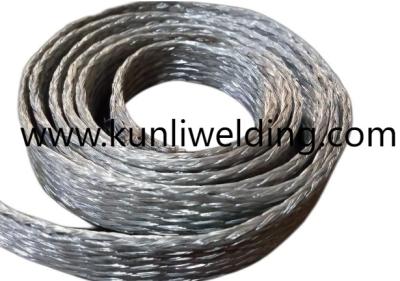
Electrical conductors come in various configurations, each designed to meet specific performance requirements in demanding applications. Aluminum Braided Wire Manufacturers understand that the construction details of braided conductors significantly influence their electrical and mechanical properties. The weave pattern and strand count represent fundamental design parameters that determine how effectively these flexible conductors carry current, dissipate heat, and withstand mechanical stresses encountered in industrial and commercial installations.
Weave patterns dictate how individual strands interlace to form the braided structure. Common patterns include simple braids where strands cross at regular intervals, and more complex configurations featuring multiple layers or varying crossing angles. The geometry created by these patterns affects contact points between strands, which directly influences electrical resistance. Tighter weaves with more frequent crossing points create additional contact interfaces where current must transfer between strands. Each contact point introduces resistance, potentially reducing overall conductivity compared to parallel strand arrangements.
Strand count refers to the total number of individual wires comprising the braided assembly. Higher strand counts distribute current across more parallel paths, theoretically increasing current carrying capacity. However, this relationship becomes complex when considering how strands interact within the braid structure. Adding more strands without adjusting weave pattern can increase packing density, potentially creating heat dissipation challenges. The additional strands may also introduce more contact resistance points if the weave forces excessive crossing and interaction between conductors.
Current distribution across braided structures exhibits non-uniform characteristics influenced by weave geometry. Outer strands in a braid experience different electrical environments than inner strands due to varying inductance and proximity effects. The weave pattern determines how current distributes between these positions during operation. Patterns that encourage uniform current sharing across all strands utilize conductor cross-section more efficiently than designs where certain strands carry disproportionate current loads. Unbalanced current distribution creates localized heating that limits overall ampacity.
Flexibility represents a key advantage of Aluminum Braided Wire over solid conductors, with weave pattern and strand count both affecting mechanical properties. Looser weaves with fewer crossing points allow greater movement between individual strands, enhancing flexibility for applications requiring frequent bending or vibration tolerance. Tighter weaves restrict strand movement, creating stiffer assemblies that resist deformation. Applications demanding both flexibility and high current capacity must balance these competing requirements through careful weave and strand selection.
Thermal performance varies significantly with braid construction parameters. Heat generated by electrical resistance must dissipate through the conductor surface to prevent temperature rise that degrades insulation or reduces conductor lifespan. Surface area available for heat transfer depends on how strands arrange within the braid. Open weave patterns expose more strand surface to surrounding air, improving convective cooling. Dense weaves with many strands packed tightly together may trap heat within the braid interior, creating temperature gradients that concentrate thermal stress in certain areas.
Mechanical strength and durability respond to construction details in important ways. Individual strands in a braid support each other through the interlaced structure, distributing mechanical loads across multiple elements. Weave patterns that lock strands together more securely resist strand pullout and maintain structural integrity under tension. Higher strand counts potentially increase overall tensile strength by spreading loads across more individual elements, though this benefit diminishes if strands are too fine to contribute meaningfully to load bearing.
Contact resistance between strands fluctuates with vibration and thermal cycling as the braid structure shifts microscopically. Weave patterns that maintain stable strand positioning minimize these resistance variations, ensuring consistent electrical performance over time. Designs where strands can move freely relative to each other may experience intermittent contact quality, introducing noise or signal degradation in sensitive applications.
Aluminum Braided Wire benefits from the metal's lightweight properties, but aluminum's lower conductivity compared to copper requires larger cross-sections for equivalent current capacity. Strand count and individual strand diameter must compensate for this conductivity difference while maintaining acceptable flexibility and weight. Weave patterns designed for copper braids may not translate directly to aluminum applications due to these material property differences.
Oxidation concerns specific to aluminum influence optimal braid construction. Aluminum forms surface oxides that increase contact resistance between strands. Weave patterns minimizing the number of contact points reduce cumulative oxide resistance throughout the assembly. Protective treatments or plating may be necessary to maintain low resistance connections between strands in certain weave configurations.
Manufacturing complexity increases with strand count and weave pattern intricacy. More elaborate designs require specialized braiding equipment and quality control to ensure consistent geometry throughout the conductor length. Production efficiency considerations sometimes limit practical strand counts and weave options available for specific applications. For detailed technical specifications on braided conductor options and application guidance, comprehensive resources await at https://kunliwelding.psce.pw/8p6qdb supporting informed selection decisions for electrical installation requirements.