Categories
Tags
Archives
The Essential Role of SF6 Gas Treatment & Recovery in Power Sys
-
SF6 (sulfur hexafluoride) gas plays a pivotal role in modern electrical power systems due to its exceptional dielectric and arc-quenching characteristics. However, maintaining the quality and quantity of SF6 gas used in insulated switchgear, gas-insulated substations (GIS), and circuit breakers requires professional SF6 gas treatment and SF6 gas recovery solutions. With strict environmental and safety standards worldwide, the process of handling SF6 gas from old or serviced equipment and preparing it for reuse is increasingly critical.
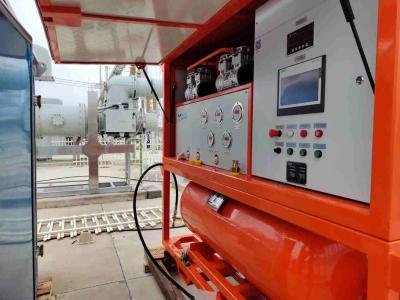
At the heart of this process are dedicated SF6 gas recovery systems. These devices are engineered to extract gas from electrical equipment undergoing maintenance or decommissioning while minimizing leaks and ensuring high recovery efficiency. Typical recovery systems consist of vacuum pumps, compressors, and dry filtration systems. They first create a deep vacuum inside the switchgear, forcing SF6 gas to flow into a storage tank. Advanced filters remove particulate contaminants and moisture during this step, safeguarding gas quality for reuse or storage.
Once the gas is extracted, SF6 gas treatment begins. Raw recovered SF6 often contains moisture, decomposition products from electrical arcing, and other impurities that degrade its insulating performance. These contaminants can reduce breakdown voltage and increase the risk of partial discharge inside high-voltage equipment. Hence, specialized purification modules, including dryers and high-efficiency adsorbent filters, are integrated into modern SF6 treatment machines to restore gas quality to acceptable standards.
Moreover, environmental responsibility is also a key driver of SF6 gas treatment and recovery. SF6 has an extremely high Global Warming Potential (GWP), many thousands of times greater than CO₂. Leaks during maintenance or at end-of-life disposal can significantly impact greenhouse gas emissions. Effective recovery systems not only protect equipment but also align with sustainability goals by preventing atmospheric release.
In practice, after treatment and purification, SF6 gas is typically stored in high-pressure cylinders or liquid tanks. These storage vessels allow the gas to be reused in future operations or redistributed to other systems in need. A well-executed SF6 recovery and treatment cycle can extend the lifecycle of the gas, save procurement costs, and lower environmental impact. As electrical grids continue to expand and modernize, mastering the full SF6 gas treatment cycle — from recovery through purification and storage — remains indispensable for reliability and regulatory compliance.